




Life often brings challenges that seem difficult to overcome despite sincere efforts. Whether it’s recurring obstacles, financial setbacks, family conflicts, or a constant feeling of negativity, many devotees turn to sacred Vedic rituals to seek divine guidance and inner strength. Among these, Chandi Havan is regarded as one of the most powerful rituals dedicated to Goddess Chandi, performed with the intention of invoking her blessings for protection, courage, and spiritual well-being.
Many devotees especially choose to perform Chandi Havan on Navami, as this auspicious day is closely associated with the worship of Goddess Durga and is believed to amplify the spiritual significance of the ritual. In this blog, we’ll understand the importance of Chandi Havan, explore its different types, and discuss the common situations in which people traditionally choose to perform this sacred havan.
What is Chandi Havan?
For people wondering “what is Chandi Havan?” It is a powerful Vedic ritual dedicated to Goddess Chandi, a form of Goddess Durga revered for her strength, protection, and victory over evil. The ritual involves chanting sacred verses from the Durga Saptashati Path while offering oblations into the holy fire to seek divine blessings, remove obstacles, and invite peace and prosperity.
Depending on the purpose of the ritual, different types of Chandi Path may be performed before or alongside the havan, as guided by Vedic traditions and a qualified pandit.
Types of Chandi Havan
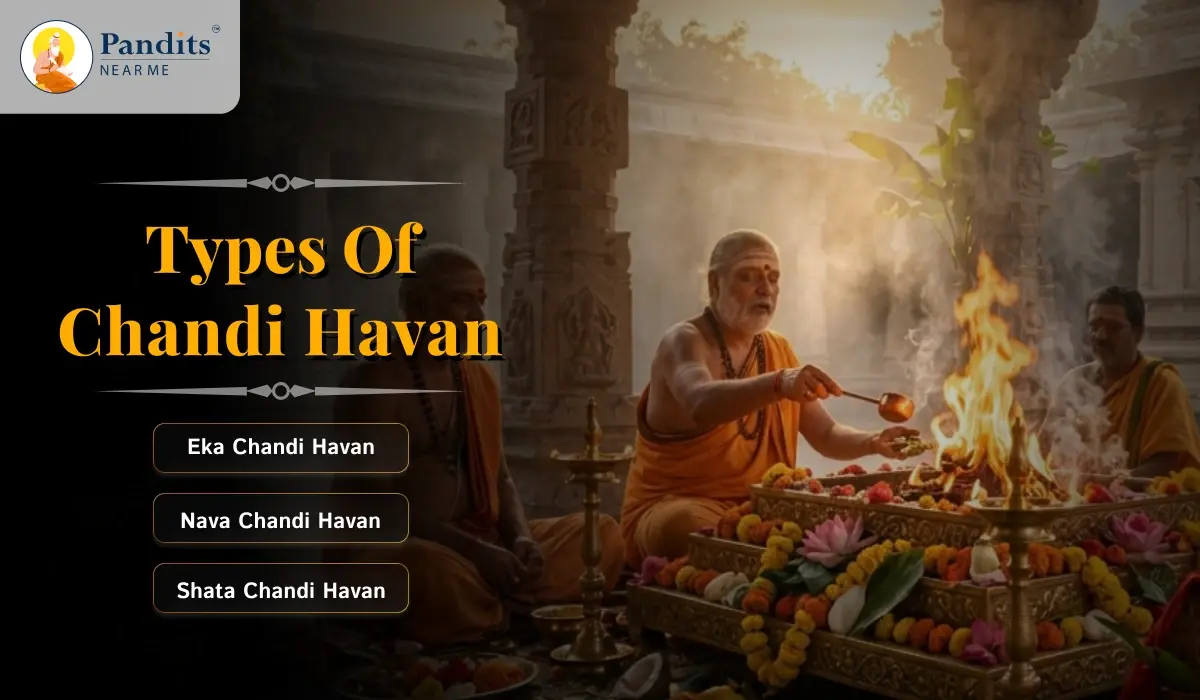
The types of Chandi Havan vary based on the number of recitations of the Durga Saptashati and the scale of the ritual. While the significance of Chandi Havan remains the same (to invoke the blessings of Goddess Chandi for protection, strength, and prosperity), each type is performed for different spiritual purposes and occasions.
Eka Chandi Havan (Eka Homam)
Eka Chandi Havan involves a single complete recitation of the Durga Saptashati followed by the sacred fire ritual. It is commonly performed by individuals or families seeking divine blessings, protection, success, and peace during auspicious occasions or personal milestones.
Nava Chandi Havan (Navachandi Yagya)
Nava Chandi Havan includes nine complete recitations of the Durga Saptashati along with the havan. This elaborate ritual is often performed during Navratri, temple ceremonies, or significant family events to pray for prosperity, harmony, and the removal of major obstacles.
Shata Chandi Havan (Shatachandi Havan)
Shata Chandi Havan is a grand Vedic ritual involving one hundred recitations of the Durga Saptashati. Usually conducted over multiple days by experienced Vedic pandits, it is performed for large-scale spiritual purposes, community welfare, protection, and the invocation of the Goddess’s divine blessings.
Also read this blog: Durga Puja 2026: Complete Festival Calendar & Rituals
9 Signs You Need Chandi Havan
According to Hindu tradition, devotees often perform Chandi Havan during challenging phases of life to seek the blessings of Goddess Chandi. While life’s difficulties can arise for many reasons, this sacred ritual is regarded as a powerful way to pray for protection, strength, and the removal of obstacles. Here are some signs you need Chandi Havan:
Sign 1: Repeated Failures Despite Hard Work
If you're consistently putting in your best efforts but facing repeated setbacks in your career, studies, business, or personal life, it may be time for spiritual reflection. Many devotees perform Chandi Havan to seek the blessings of Goddess Chandi for courage, renewed confidence, and the strength to overcome obstacles on their path.
Sign 2: Family Conflicts and Negativity at Home
Frequent arguments, misunderstandings, or a lack of peace within the household can create emotional stress for everyone. Many devotees choose to perform Chandi Havan during such times, praying to Goddess Chandi for harmony, positivity, and the strength to restore balance and unity within the family.
Sign 3: Business Losses or Financial Problems
Ongoing business setbacks, unexpected financial difficulties, or a lack of growth despite sincere efforts can be discouraging. Many devotees perform Chandi Havan to seek the blessings of Goddess Chandi for wisdom, resilience, and the removal of obstacles, while praying for stability, prosperity, and success in their professional and financial endeavors.
Sign 4: Health Issues That Don't Seem to Heal
When health challenges persist despite ongoing treatment, they can take a toll on both physical and emotional well-being. Alongside appropriate medical care, many devotees perform Chandi Havan as a spiritual practice to pray for strength, peace of mind, and the blessings of Goddess Chandi during difficult times.
Sign 5: Feeling of Negative Energy or Black Magic
Some people may experience a persistent sense of negativity, fear, or emotional heaviness that affects their peace of mind. In Hindu tradition, devotees who believe they are facing negative influences or seek spiritual protection often perform Navchandi Havan to pray for the blessings of Goddess Chandi, inner strength, and a more positive, peaceful environment.
Sign 6: Enemies Creating Obstacles in Your Life
If you are facing constant opposition, false accusations, or repeated obstacles caused by others, it can affect your confidence and progress. Many devotees perform Chandi Havan to seek the blessings of Goddess Chandi for protection, courage, and the strength to overcome challenges while moving forward with confidence.
Sign 7: Mental Stress, Anxiety, and Depression
Persistent stress, anxiety, or feelings of emotional distress can make daily life challenging. Along with seeking appropriate professional support when needed, many devotees perform Chandi Havan as a spiritual practice to pray for inner peace, emotional strength, and the blessings of Goddess Chandi during difficult times.
Sign 8: Unexplained Fear or Nightmares
Recurring fear, disturbing dreams, or nightmares can leave you feeling anxious and unsettled. In Hindu tradition, many devotees perform Chandi Havan to seek the divine protection of Goddess Chandi, praying for courage, peace of mind, and a sense of spiritual security.
Sign 9: Strong Feeling of Performing Chandi Havan
Sometimes, devotees feel a deep spiritual calling or a strong inner desire to perform Chandi Havan without any specific reason. In Hindu tradition, this is often seen as an expression of devotion and faith. Many choose to perform the ritual to strengthen their spiritual connection with Goddess Chandi and seek her blessings for protection, peace, and overall well-being.
Book Pandit for Chandi Homam with Pandits Near Me
Perform your Chandi Homam with confidence by booking experienced and verified Vedic pandits through Pandits Near Me. Whether you wish to perform Chandi Havan on Navami at home, at a temple, or during auspicious occasions like Navratri and more, we help you connect with qualified pandits who follow authentic Vedic traditions.
With Pandits Near Me, you get:
Verified and experienced Vedic pandits
Online and at-home Chandi Homam services
Muhurat guidance for the ritual
Complete puja assistance, including samagri guidance
Transparent pricing with easy online booking
Dedicated customer support throughout your booking
Book Pandit for Chandi Homam today with Pandits Near Me and perform this sacred ritual with the guidance of trusted pandits, right at your convenience.